
When the harsh winter weather finally breaks across Northwestern Michigan, homeowners breathe a sigh of relief. The snow melts, the days grow longer, and the temperatures rise. Do you know what else rises during this seasonal shift? The risk of severe moisture problems in your home.
Spring water damage is a serious threat to properties in Ludington, Scottville, Manistee, Hart, and surrounding communities. Rapid snowmelt combined with heavy seasonal rains can quickly overwhelm your property defenses. If you ignore the early warning signs, you could face costly repairs, structural issues, and dangerous mold growth.
As a family-owned business with over 20 years of experience, Pro-Master Cleaning & Restoration understands the unique challenges our local communities face. We want to help you protect your investment. Keep reading to discover the top five causes of spring flooding and learn exactly how to avoid water damage in spring.
1. Clogged Gutters and Downspouts
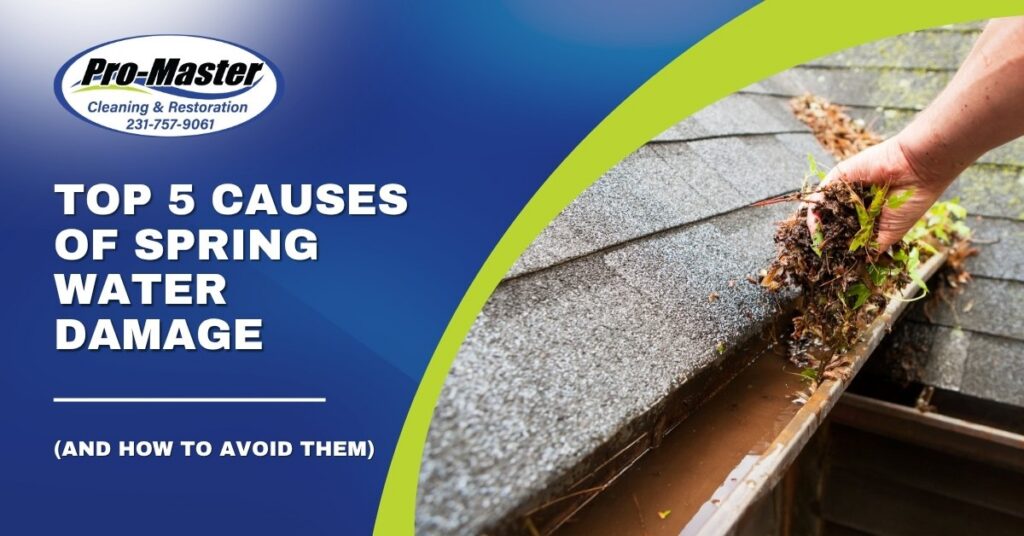
Your gutters serve as the first line of defense against exterior moisture. Throughout the fall and winter, leaves, twigs, and debris accumulate inside these channels. When the spring thaw begins, this debris blocks melting snow and rain from flowing away from your roof.
The trapped water eventually spills over the edges, pouring directly down your exterior walls and pooling right next to your foundation. This overflow is one of the leading causes of spring flooding in residential basements.
Gutter Cleaning for Spring
Spring water damage prevention starts at the roofline. You must clear out all blockages before heavy rain arrives. Grab a sturdy ladder, wear protective gloves, and scoop out the debris. Run a hose through the gutters to ensure the water flows freely through the downspouts. Make sure your downspouts extend at least five feet away from the base of your house to prevent pooling.
2. Poor Grading Around the Home
Take a walk around your yard and look closely at the ground near your exterior walls. Does the soil slope away from your house, or does it tilt inward? If the ground slopes toward your foundation, you have a major drainage problem.
Melting snow and rainwater naturally follow the path of least resistance. Poor grading acts like a funnel, directing thousands of gallons of water straight into your basement or crawlspace.
Yard Drainage Solutions
Correcting your grading is one of the most effective yard drainage solutions available. You need to build up the dirt around your foundation, so the ground slopes downward and away from the home. For more severe pooling issues, consider installing a French drain. This underground trench system captures excess surface water and redirects it safely away from your property, effectively preventing basement flooding.
3. Cracked and Vulnerable Foundations
Winter freeze and thaw cycles cause the soil around your home to expand and contract constantly. This intense pressure often cracks the concrete walls of your foundation. Even a hairline crack provides an easy entry point for moisture.
When the snow melts and the ground becomes saturated, hydrostatic pressure pushes that water through the concrete. Foundation cracks and water damage go hand in hand, often resulting in ruined drywall, soaked carpets, and hidden mold colonies.
Fixing Foundation Cracks to Avoid Moisture
Inspect your foundation walls thoroughly, both inside and out. Look for any visible fissures, damp spots, or chalky white mineral deposits. You can seal minor surface cracks with a specialized waterproof masonry caulk or epoxy injection kit. However, if you spot large, widening, or horizontal cracks, you must contact a structural professional immediately. Sealing these gaps is a crucial step in preventing basement flooding.
4. Severe Seasonal Weather Patterns
Spring weather in Northwestern Michigan is notoriously unpredictable. Calm mornings can quickly turn into severe afternoon thunderstorms. Heavy downpours drop massive amounts of rain over a short period, overwhelming local municipal sewer systems and your home drainage setups.
Spring storm water damage often impacts roofs, windows, and doors. High winds can tear off shingles, leaving your roof deck exposed to the rain. Worn weatherstripping around your windows allows driving rain to seep into your living spaces, ruining hardwood floors and windowsills.
Preparing for Spring Storm Water Damage
Inspect your roof for missing, curling, or damaged shingles, and replace them promptly. Check the seals around all exterior doors and windows. Apply fresh caulk or replace old weatherstripping to create a watertight barrier. By securing your building, you drastically reduce your risk of unexpected interior flooding during a major storm.
5. Overworked and Failing Sump Pumps
If you have a basement in Mason, Oceana, or Lake County, you likely rely on a sump pump to keep things dry. Your sump pump works overtime during the spring thaw, constantly accumulating groundwater up and out of your basement.
Unfortunately, many homeowners neglect this vital piece of equipment until it is too late. A mechanical failure, a clogged discharge pipe, or a sudden power outage during a storm will render your pump useless. When the pump stops, the water level rises fast.
Sump Pump Maintenance Tips
Do not wait for a heavy storm to find out your pump is broken. Follow these essential sump pump maintenance tips to ensure your system is ready:
- Pour a bucket of water into the sump pit to verify the float switch activates the pump.
- Check the discharge pipe outside to ensure it is completely clear of debris and ice.
- Listen for strange noises when the motor runs.
- Install a battery backup system so your pump continues working even if the neighborhood loses power.
Trust Your Local Water Damage Restoration Services
Sometimes, despite your best efforts, nature wins. A burst pipe, a sudden flash flood, or an unexpected storm can leave your home under inches of water. When disaster strikes, you need immediate professional help to minimize the destruction and protect your family from mold.
Pro-Master Cleaning & Restoration provides top-tier local water damage restoration services. Our certified technicians are available 24/7 to respond to your emergencies. We use industrial-grade extraction equipment and advanced drying techniques to restore your property quickly and safely.
Are you dealing with the aftermath of a spring storm, or do you want to address existing moisture issues before they worsen? We are here when you need us.
Contact Pro-Master Cleaning & Restoration today at 231-757-9061 or visit our emergency water extraction page to schedule your free estimate. Let our family protect you.
Frequently Asked Questions About Spring Water Damage
Early warning signs include a persistent musty odor, peeling paint or wallpaper, dark stains on ceilings or walls, and sudden spikes in your water bill. If you notice damp spots on your carpets or warped floorboards, you should investigate immediately.
Standard homeowners insurance typically covers sudden and accidental water damage, such as a burst internal pipe. However, most standard policies do not cover flooding caused by external weather events or groundwater seepage. You usually need a separate flood insurance policy to cover weather-related spring flooding.
Mold spores begin to multiply within 24 to 48 hours of initial moisture exposure. This rapid growth highlights the importance of immediate water extraction and professional drying services to protect your indoor air quality.
Yes. A flooded basement poses severe electrical hazards and health risks due to contaminated water. Professional restoration teams have the proper safety gear, heavy-duty pumps, and moisture meters required to remove the water safely and ensure the underlying structure is completely dry.
Signs of a failing sump pump include unusual noises, frequent cycling, visible rust, or water pooling in the sump pit. Test your pump by pouring water into the pit to ensure it activates. If it doesn’t, or if it struggles to pump water out, it may need repair or replacement.
First, stop the source of water if possible, such as shutting off the main water valve. Remove valuable items from the affected area and document the damage with photos for insurance purposes. Contact a professional water damage restoration service like Pro-Master immediately to prevent further damage.
The cost of water damage restoration varies depending on the extent of the damage, the size of the affected area, and the type of water involved (clean, gray, or black water). On average, restoration costs range from $1,200 to $5,000. Contact Pro-Master for a free estimate tailored to your situation.
Yes, Michigan’s spring weather often brings heavy rains and rapid snowmelt, which can overwhelm drainage systems and lead to basement flooding. Homes near Lake Michigan or in low-lying areas are particularly vulnerable to water damage.
Key maintenance tasks include cleaning gutters and downspouts, inspecting your roof for damage, sealing foundation cracks, and testing your sump pump. Ensure your yard is graded to direct water away from your home, and consider installing a French drain if pooling is an issue.